
Our Services
Everyday Endurance offers a variety of services for runners of all abilities and experience levels. Each and every runner is unique so we fully customize our services to fit your needs. Below, please find a list of our primary services.
Lactate Testing
Understand Your Engine
Lactate testing is one of the most powerful tools available to endurance athletes. It allows us to measure how your body produces and clears lactate at different running intensities, revealing the true physiological zones that drive performance.
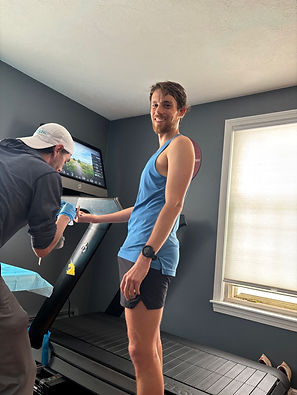
During a lactate test, you’ll run a series of short intervals and during the rest periods, we will measure your blood lactate levels through a series of finger-prick blood samples. From this, we build your individual metabolic profile, identifying key thresholds such as:
• Aerobic Threshold (LT1) – the intensity where lactate first begins to rise above baseline and where much of endurance development occurs
• Lactate Threshold (LT2) – the intensity associated with sustained hard efforts like tempo runs and longer races
• Personalized training zones based on your physiology
Beyond identifying training zones, lactate testing can help reveal what may be limiting your performance. Many athletes have a “kink in the hose” somewhere in their physiology. Your lactate profile helps us identify where that limitation may be and how we can tailor your training plan to help you reach your running potential.
Unlike generic heart rate or pace zones, lactate testing shows exactly how your body responds to effort.
Interpreting Your Results
After the test, we’ll walk through your results immediately with you, explaining what your lactate profile means and how it applies to your training and racing goals.
Within a few days, you’ll receive a detailed report that translates your results into actionable training guidance. This report includes:
• Your personalized training zones (pace and heart rate)
• Identification of LT1 and LT2 thresholds
• Insights into your aerobic development
• Suggested workouts aligned with your goals
The goal isn’t just data — it’s helping you apply the results directly to your training.
Why Athletes Use Lactate Testing
• Train at the right intensities
• Avoid running workouts too hard or too easy
• Track fitness changes across a season to see progress
• Optimize pacing for races
• Identify physiological limiters in their training
• Build smarter training plans
The result is smarter training with less guesswork.


Gate Analysis
Understand How You Move
How you run matters. Small inefficiencies in stride mechanics can increase injury risk, waste energy, and limit performance over long distances.
Our gait analysis evaluates how your body moves while running and helps identify the areas where improvement can have the biggest impact on durability and efficiency.
During the session, we combine expert clinical evaluation with modern wearable technology to analyze your stride in real running conditions.
Objective Movement Scoring
Each athlete receives a movement score from 0–100, providing a simple snapshot of overall running mechanics.
Rather than trying to completely change your stride, our goal is to identify the single greatest opportunity for improvement — the mechanical “weak link” that may be increasing injury risk or limiting efficiency.
Your report highlights:
• Your overall gait score
• The primary limiter in your stride mechanics
• Key supporting observations from the analysis
This approach helps athletes focus on the changes that matter most, rather than chasing a “perfect” running form.
How We Evaluate Your Form
We incorporate RunEasi wearable gait analysis technology, which measures how your body absorbs and manages forces while running.
These sensors provide insights into metrics such as:
• Impact loading and force absorption
• Stride balance between left and right sides
• Cadence and ground contact dynamics
• Mechanical stress patterns across your stride
Understanding how your body handles these forces can reveal movement patterns that may contribute to injury risk or inefficient running mechanics.
Your Personalized Improvement Plan
After the session, you’ll receive a detailed gait analysis report along with targeted recommendations to improve your movement.
Your report includes:
• Your 0–100 gait score
• Key RunEasi performance metrics
• Identification of your primary mechanical limiter
• A custom strength and mobility routine designed to address that limiter
Each report is personally reviewed and prepared by our certified gait analyst, Alex Trotsky, PT MSPT, OMT, FAAOMPT, who analyzes the movement data and prescribes exercises specifically designed to improve the area that will have the greatest impact on your running.
Rather than generic drills, your program focuses on targeted exercises designed for your specific movement profile.
Track Progress Over Time
Athletes can repeat gait testing periodically to measure improvements in movement quality.
Retesting allows you to:
• See improvements in your gait score
• Track changes in force absorption and stride balance
• Evaluate whether interventions are improving efficiency
This provides a clear and objective way to measure progress, rather than relying on guesswork.


Why Athletes Use Gait Analysis
• Reduce injury risk
• Improve running efficiency
• Identify biomechanical limitations
• Guide strength and mobility work
• Track improvements in movement
The goal isn’t to force a “perfect stride,” but to help your stride become stronger, more resilient, and more efficient.
Shoe Selection Consulting
Find the Shoe That Works Best for You
Performance running shoes are more advanced—and more expensive—than ever. With many race-day shoes costing $200–$300 or more, choosing the right pair can be difficult.
What works well for one runner doesn’t always work the same way for another. Differences in biomechanics and stride mechanics mean the “fastest” shoe isn’t always the fastest for you.
Our Race Day Shoe Testing helps athletes determine which shoe best supports their stride and race goals.
How it Works
Athletes bring 2–3 pairs of shoes they are considering for racing. During the session, you’ll run short intervals in each pair while we evaluate how the shoes affect your mechanics and efficiency.
Because testing is done on a treadmill and for short periods, many athletes order several shoes to try and bring them to the session. Pairs that aren’t the right fit can often be returned unused, helping avoid expensive trial and error.

Why Athletes Do It
• Compare race-day shoes side by side
• Understand how different shoes affect stride
• Avoid costly guesswork when buying shoes
• Choose your best shoe with confidence!
Coaching
Personalized Training Built Around You
Every athlete responds differently to training. Our coaching focuses on individualized training designed around your physiology, experience level, and goals.
Whether you’re preparing for your first race or chasing a personal best, we build programs that balance performance, consistency, and long-term durability.
Our Training Philosophy
We believe the aerobic system is the foundation of endurance performance.
Our programs frequently incorporate high-end Zone 2 training (often referred to as LT1) to build aerobic capacity, durability, and efficiency. These sessions help athletes develop the fitness needed to support faster running while remaining manageable within a full training week.
The goal is to maximize long-term fitness while keeping training sustainable.
Coaching for Real Life
Like many of the athletes we coach, we balance endurance training with professional careers and busy lives.
Because of this, we’re passionate about helping athletes maximize the time they are able to dedicate to training. Rather than simply increasing volume, our coaching focuses on making sure each week of training delivers meaningful progress toward your goals.
Structured Training Through TrainingPeaks
All coaching is delivered through TrainingPeaks, where athletes receive structured workouts and can track progress over time.
Rather than providing a long-term static plan, we write your training each week based on how your training is progressing, upcoming races, and the realities of your schedule.
This allows training to adapt as your fitness develops and ensures each week of training is purposeful and aligned with your goals.

What Coaching Includes
Athletes working with Everyday Endurance receive:
• Weekly training written specifically for you
• Structured workouts delivered through TrainingPeaks
• Guidance on pacing, effort, and workout execution
• Training zones informed by physiology when testing is performed
• Race planning and pacing strategy
• Ongoing communication and feedback
Who Coaching Is For
Our coaching works well for athletes who want:
• More structure in their training
• Guidance on how to train at the right intensities
• Accountability and ongoing feedback
• Support preparing for key races
We work with athletes across a wide range of experience levels—from runners preparing for their first race to experienced athletes chasing new personal bests. We also coach athletes from around the US - no need to be local to MA!
Endurance training involves inherent risks, and coaching recommendations are based on available information and athlete feedback. Athletes are responsible for monitoring their health and should consult a physician before beginning a new training program.

Still have questions?
We invite you to take a look at our FAQs featured on our Home page or click the button below to be redirected.
Otherwise, please Contact Us!